INNOVATION
Kwinana Shows Australia Can Do More Than Dig
Covalent Lithium's Kwinana refinery proves vertical integration can solve cost and quality challenges in Australian lithium hydroxide production
24 Feb 2026
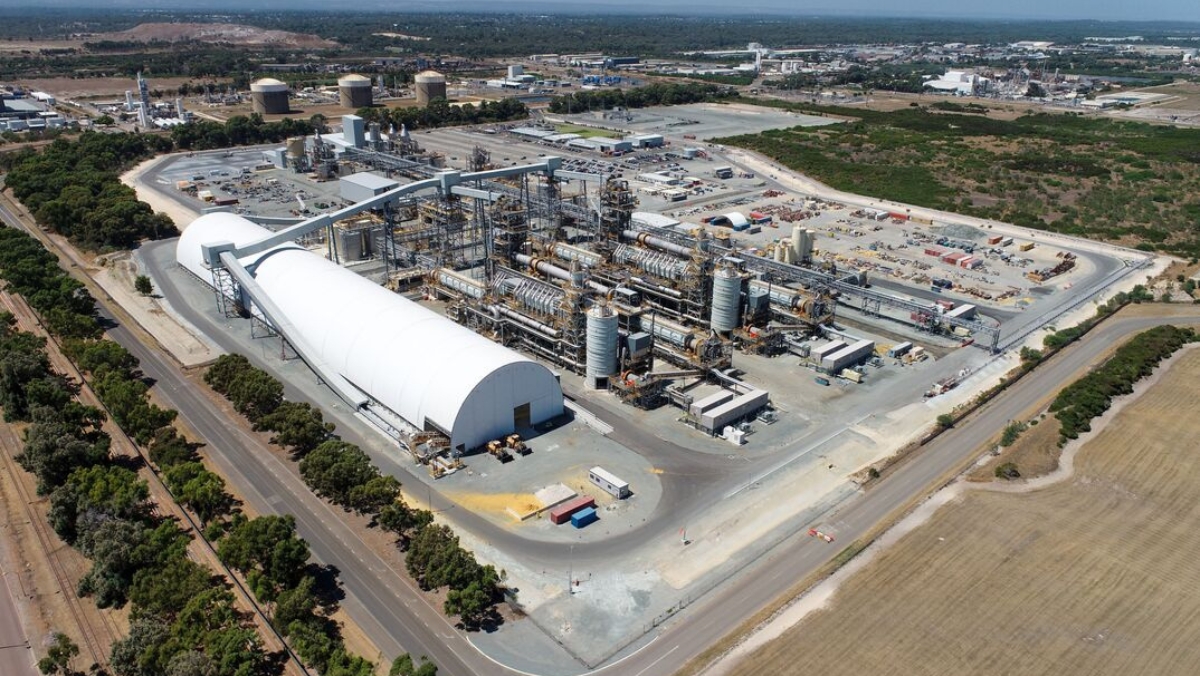
Australia has long been content to dig things up and ship them out. For lithium, that arrangement is changing, if slowly. Covalent Lithium's refinery in Kwinana, south of Perth, achieved first battery-grade lithium hydroxide production in mid-2025, making it the most complete mine-to-refinery lithium operation in the country. Whether it becomes a model for others depends on questions the industry is not yet ready to answer.
The logic of integration is straightforward. Covalent draws its feedstock from the Mount Holland mine, also in Western Australia, where output was running above 80% of capacity through 2025. By processing its own concentrate rather than buying on the open market, the refinery avoids spodumene price swings and keeps feed quality consistent from ore through to finished product. That matters. Lithium hydroxide for electric vehicle batteries must meet stringent purity standards, and controlling every upstream variable helps. Wesfarmers, which co-owns the operation, said in its February 2026 half-year results that commissioning had been \\\"pleasing,\\\" with the plant producing material to design specification.
At full tilt, Kwinana is designed to produce around 50,000 tonnes of battery-grade lithium hydroxide per year, enough for roughly one million electric vehicles. The ramp to that level is expected to take 18 months, with commercial samples already being prepared for customer qualification. Covalent's chief executive, Ross Martelli, noted at first production that the plant was \\\"performing as expected during early-stage operations.\\\" The Australian government, in its February 2026 Critical Minerals Prospectus, listed Kwinana among four lithium processing projects it considers investment-ready.
The template is appealing. Integration reduces market exposure, simplifies process control, and positions producers to satisfy the traceability requirements that Western battery supply chains are beginning to enforce. But Kwinana is still ramping. Battery-grade production during commissioning is not the same as sustained, cost-competitive output at nameplate volumes. Global lithium hydroxide prices have been under pressure, and the economics of refining in Australia, with its higher labour and energy costs, remain untested at scale.
Australia has found a way to make battery-grade hydroxide on its own soil. Whether it can make money doing so is a separate question, and a more interesting one.
SUBSCRIBE FOR UPDATES
By submitting, you agree to receive email communications from the event organizers, including upcoming promotions and discounted tickets, new, and access to related events.