INVESTMENT
Lithium, Gallium, and a Very Expensive Friendship
A US-Australia framework commits $3 billion in near-term joint financing across an $8.5 billion critical minerals project pipeline
08 Dec 2025
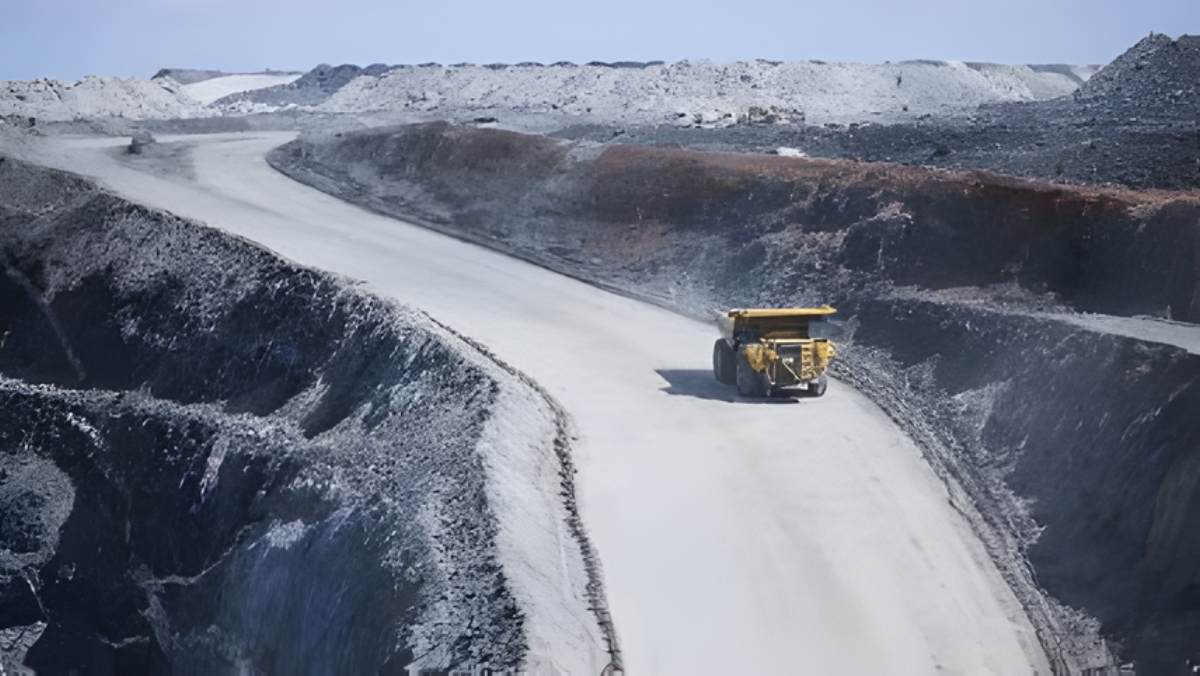
When the US and Australia signed a bilateral investment framework at the White House last October, it marked something genuinely new: a formal, institutionally backed partnership to develop critical minerals together, with real money attached. The deal commits at least $3 billion in near-term joint financing across a project pipeline valued at up to $8.5 billion, covering everything from project selection to permitting to capital deployment through loans, equity stakes, and offtake-backed financing.
The financial architecture is substantial. The US Export-Import Bank issued seven letters of interest totaling more than $2.2 billion, expected to catalyze up to $5 billion in total investment across qualifying Australian projects. Early named transactions include a $200 million US equity stake in Alcoa's high-purity gallium refinery in Western Australia and a $100 million commitment to Arafura's Nolans rare earths project in the Northern Territory. Both governments pledged at least $1 billion each within six months of signing, with recoverable resources across the identified pipeline estimated at up to $53 billion.
The strategic rationale is not subtle. Australia holds 680 resource deposits aligned with the US critical minerals list, and the framework is designed to accelerate those assets into production while reducing dependence on Chinese-controlled processing. A bilateral Critical Minerals Supply Security Response Group, co-led by the US Secretary of Energy and Australia's Minister for Resources, has been established to identify vulnerabilities and coordinate delivery. Both governments have also committed to streamlining permitting timelines, targeting a structural bottleneck that has stalled project bankability for years.
At the domestic level, the same capital logic applies. Australia's National Reconstruction Fund committed AU$50 million in equity to Liontown, supporting the underground ramp-up at Kathleen Valley in Western Australia, deploying government capital to de-risk a strategic asset and draw in private co-investment. Production is forecast to grow 6 percent in 2026 to roughly 120,300 tonnes of lithium, with compound annual growth of 4.9 percent projected through 2035.
The combination of allied co-investment, domestic equity deployment, and an accelerating project pipeline is reorienting capital flows into Australian lithium. Speculative exposure is giving way to structured, long-term supply chain investment.
SUBSCRIBE FOR UPDATES
By submitting, you agree to receive email communications from the event organizers, including upcoming promotions and discounted tickets, new, and access to related events.